
How Non-Tariff Barriers Quietly Undermine U.S. Manufacturers in Global Markets
Introduction
A. Context
Why This Conversation Matters Now – While tariffs dominate headlines, it’s non-tariff barriers (NTBs) that are quietly causing long-term damage to U.S. manufacturing competitiveness. As we enter a new era of global trade where overt protectionism becomes politically risky, many nations are weaponizing regulatory frameworks, standards, and certifications to control market access. For U.S. manufacturers, especially small and mid-sized firms, these unseen hurdles can be just as costly – if not more so – than traditional tariffs. This is of core importance to our readers and core importance to Manufacturing International
The 2025 National Trade Estimate Report from the Office of the United States Trade Representative (USTR) highlights a surge in NTBs globally, from documentation bottlenecks to technical regulations designed to block imports. This article will examine how these barriers function, where they hurt the most, and why the latest tariff pause from the Trump administration is not a reprieve—but a redirection.
I. Understanding Non-Tariff Barriers (NTBs)
Definition: Non-tariff barriers are trade restrictions that take the form of regulations, licensing requirements, product standards, local content rules, and customs procedures—as opposed to taxes or tariffs on imports.
Examples of Non-Tariff Barriers – NTBs:
- Product safety standards that vary by country
- Documentation requirements at customs
- Local content laws mandating domestic sourcing
- Pre-shipment inspections
- Packaging and labeling standards
These regulations often appear innocuous—or even consumer-friendly—but they create substantial compliance burdens, particularly for firms unfamiliar with foreign systems.
II. How NTBs Impact U.S. Manufacturers
Small and mid-sized manufacturers are the most exposed. Large firms often have legal departments or consultants to manage compliance. For everyone else, NTBs can:
- Delay time-to-market by months
- Add unexpected costs from rejected shipments
- Require costly product redesigns
- Result in missed contract deadlines
Real-World Non-Tariff Barrier Challenges:
- CE Marking in the EU: Even for simple machinery, manufacturers must meet EU conformity requirements that include specific documentation, translations, and third-party testing.
- REACH Compliance: U.S. chemical manufacturers face expensive and bureaucratic hurdles under the EU’s REACH chemical registration framework.
- India & Brazil: Both require in-country testing for telecom and electronic equipment, even when equivalent U.S. certifications already exist.
III. The NTB vs. Tariff Dynamic
Comparison Grid: Tariffs vs. Non-Tariff Barriers
| Feature | Tariffs | Non-Tariff Barriers |
|---|---|---|
| Visibility | Highly visible, politically sensitive | Often hidden, bureaucratic |
| Measurability | Easily quantifiable | Difficult to measure impact |
| Negotiability | Often negotiated in trade talks | Rarely discussed or dismantled |
| Compliance Cost | Simple to account for | Complex, ongoing compliance cost |
| Enforcement | Collected at border | Enforced through inspections and paperwork |
Non-tariff barriers are not just regulatory preferences—they’re often strategic tools to shield domestic markets under the guise of consumer safety or environmental protection.
Key NTBs in the EU and China
The 2025 National Trade Estimate Report highlights specific NTBs affecting U.S. manufacturers in the EU and China. Below is a table summarizing these barriers:
| Region | NTB Type | Details | Impact on U.S. Manufacturers | Relevant Numbers |
|---|---|---|---|---|
| EU | Agricultural Biotechnology | Delays in GE product approvals, 0.1% limit for unapproved biotech traits | Limits U.S. agricultural exports | 29 applications under EFSA review, 6 await EC action |
| EU | Government Procurement | Hungary favors local/non-EU suppliers, 50% EU content requirement | Reduces U.S. access to procurement markets | 50% EU content requirement |
| EU | Certification Requirements | Frequent changes in health certificates for animal products | Increases compliance costs | 14 certificate versions since 2022 |
| China | Government Procurement | Not acceded to WTO GPA, 20% price deduction for domestic products | Excludes U.S. firms from public contracts | 20% price deduction |
| China | Standards, Testing, Certification | China Compulsory Certification (CCC) system requires extensive testing | Increases costs and delays | Applies to numerous products |
| China | Digital Trade Barriers | Restrictions on cross-border data flows, data localization | Hinders U.S. tech companies | – |
EU Barriers
In the EU, NTBs like strict biotechnology regulations delay U.S. agricultural exports, while procurement practices in countries like Hungary favor local firms, limiting U.S. access to public contracts. Frequent changes in certification requirements further complicate trade, as noted in the St. Louis Fed analysis.
China Barriers
China’s NTBs, such as the CCC system and procurement biases, create significant hurdles for U.S. manufacturers. Digital trade barriers, including data localization, particularly affect tech firms, as detailed in the 2025 NTE Report.
NTBs and the 90-Day Trade Negotiations
The U.S. is currently engaged in trade negotiations with over 75 countries during a 90-day tariff pause announced on April 9, 2025, as reported by Reuters. This pause, excluding China, aims to negotiate new trade deals to address unfair practices, including NTBs, as outlined in the 2025 NTE Report.
EU Negotiations
The EU has suspended countermeasures for 90 days, creating a window to address NTBs like biotechnology delays and procurement biases, according to CNBC. Success could ease trade challenges for U.S. manufacturers.
China’s Exclusion
China faces 145% tariffs and is not part of these negotiations, as noted by The Washington Post. This could lead to retaliatory NTBs, further complicating U.S. market access.
Wait-and-See Approach
Given the complexity of these talks, a wait-and-see approach is prudent. We’ll update this post once negotiation outcomes are clear, as they could significantly impact NTBs and U.S. trade strategies.
Recommended Reading:
- Limits to Free Trade: Non-Tariff Barriers in the EU, Japan, and the US by David Hanson
- OECD Trade Policy Studies: Looking Beyond Tariffs by OECD
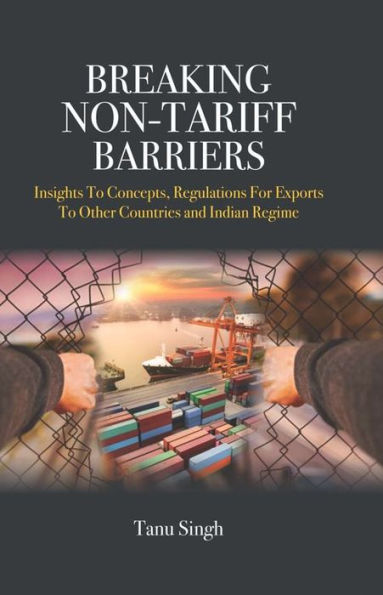
- Breaking Non-Tariff Barriers: Insights for Exports by Tanu Singh
IV. NTBs Were Part of the Trump Trade Playbook from the Start
Although best known for his tariff-first approach, President Trump and USTR Robert Lighthizer consistently raised NTBs during bilateral trade talks.
According to the 2020 USTR Report, China, the EU, and India were flagged for extensive NTB use, including forced tech transfers, conformity assessment delays, and localized data rules.
This trend has only intensified. The 2025 NTE outlines a new surge in NTBs tied to green compliance rules, labor protections, and digital sovereignty.
Conclusion from Manufacturing International: The Quiet Storm of Non-Tariff Barriers
While media attention continues to focus on tariffs and high-profile trade negotiations, non-tariff barriers are doing just as much—if not more—to shape global manufacturing. These barriers often target the very sectors the U.S. is trying to grow.
For U.S. manufacturers to thrive:
- They must understand the NTB landscape
- Develop compliance strategies
- And push for stronger federal action in trade agreements
If not, the “pause” in tariffs may be a prelude to a longer, costlier era of regulatory obstruction.
Related Articles from Manufacturing International
- The Truth About EU Automotive Tariffs and Their Impact on the United States
- Trump’s Tariffs: 90-Day Pause — Will They Reshape the U.S. Supply Chain or Just Raise Costs?
- The VAT Trap Puts U.S. Manufacturers at a Disadvantage in the EU Market
- Global Trade & Geopolitical Influences in U.S. Manufacturing After Events of February 2025
Stay informed. Stay competitive. Subscribe to Manufacturing International for more original analysis, expert tools, and global manufacturing insights.
Sources:
- 2025 National Trade Estimate Report on Foreign Trade Barriers
- USTR Releases 2025 National Trade Estimate Report
- Trump Trade Team Chases 90 Deals in 90 Days
- European Union to Put Countermeasures to U.S. Tariffs on Hold
- Nontariff Trade Barriers in the U.S. and EU
- White House Starts Trade Negotiations, Tensions High with China
- Report to the President on America First Trade Policy
- UNCTAD SDG Pulse 2024: Trends in Trade Barriers
- Limits to Free Trade: Non-Tariff Barriers in EU, Japan, US
- OECD Trade Policy Studies: Looking Beyond Tariffs
- Breaking Non-Tariff Barriers: Insights for Exports
- The Truth About EU Automotive Tariffs
- Trump’s Tariffs: 90-Day Pause
- The VAT Trap: U.S. Manufacturers in EU Market
- Global Trade & Geopolitical Influences in U.S. Manufacturing